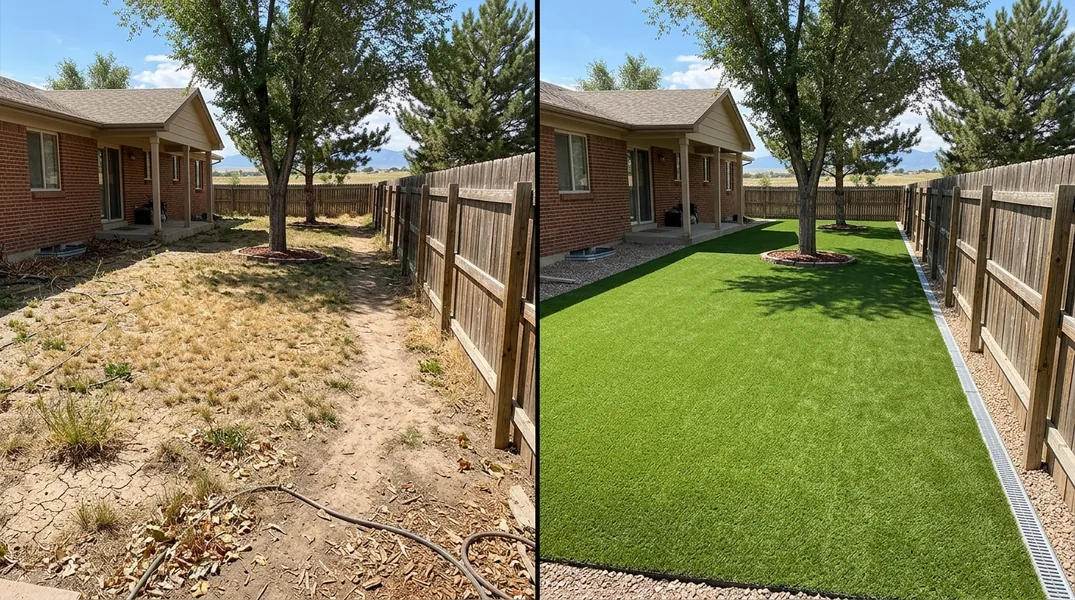
Understanding Pueblo's Climate Challenge: Why Your Lawn Struggles
Pueblo sits on Colorado's high plains at nearly 5,000 feet elevation, where the climate presents unique challenges for traditional lawn maintenance. The region experiences a semi-arid climate with annual precipitation averaging just 13 inches, intense summer heat, and unpredictable weather patterns that can stress even the hardiest grass varieties. Traditional cool-season grasses like Kentucky bluegrass and fescue, which dominate residential lawns across Colorado, require consistent moisture and moderate temperatures to thrive.
During Pueblo's hot, dry summers, homeowners face a difficult choice: invest heavily in irrigation and water bills to keep their natural grass green, or accept the brown, dormant appearance that comes with drought stress. Many residents don't realize that their lawn's summer dormancy isn't a sign of death, but rather a survival mechanism. When temperatures exceed 85 degrees Fahrenheit and soil moisture drops, cool-season grasses simply shut down to conserve resources. This natural response, while ecologically sound, leaves homeowners with brown, unappealing yards for months at a time.
The Summer Dormancy Problem: Real Grass in a Dry Climate
Summer dormancy in natural lawns is a genuine biological response, not a maintenance failure. As soil temperatures rise and moisture becomes scarce, cool-season grasses enter a protective state where they reduce growth, darken in color, and become less visually appealing. In Pueblo, this typically begins in late June and can persist through August, leaving homeowners with straw-colored yards during the season when they're most likely to host gatherings or simply enjoy their outdoor spaces.
To combat dormancy, many homeowners turn to frequent watering, which can cost $40 to $100 per month during peak summer, depending on lawn size and local water rates. Even with aggressive irrigation, results are inconsistent. Overwatering can lead to fungal diseases, while underwatering accelerates dormancy. Additionally, Pueblo occasionally experiences drought restrictions that limit outdoor watering to specific days and times, making it nearly impossible to maintain a consistently green lawn. The frustration of paying for water while still watching your grass turn brown is a reality many local homeowners face.
Winter Brown and Year-Round Color: The Real Grass Reality
The dormancy problem doesn't end when summer fades. As temperatures drop in fall, cool-season grasses naturally transition to dormancy again, turning brown and remaining that way through winter and early spring. In Pueblo, this means your lawn may be brown or partially dormant for six to eight months of the year, depending on snow cover and temperature fluctuations. Even if you've managed to keep it green through summer with extensive watering, winter dormancy is inevitable and unavoidable with natural grass.
This extended brown period creates an aesthetic challenge for homeowners who want their yards to look attractive year-round. Unlike regions with warm-season grasses that green up in summer, or temperate climates where dormancy lasts only a few weeks, Pueblo residents face a long season of brown turf. Some homeowners attempt to overseed with winter rye to maintain color, but this adds cost, complexity, and still doesn't guarantee a vibrant appearance. The reality is that natural grass in Pueblo's climate simply cannot maintain consistent, attractive color throughout the year without significant investment and effort.
Artificial Grass vs Real Grass: A Direct Comparison for Pueblo Homeowners
When comparing turf vs artificial grass, the differences become clear when you factor in Pueblo's specific climate. Real grass requires consistent watering (expensive and often restricted), produces seasonal dormancy (brown for half the year), and demands regular mowing, fertilizing, and pest management. Artificial grass, by contrast, maintains its vibrant green color year-round, requires no watering, no mowing, and minimal maintenance. For homeowners tired of chasing perfect lawn conditions in an unforgiving climate, the comparison often tips toward artificial turf.
The choice between artificial grass vs real grass ultimately depends on your priorities. If you value low maintenance, year-round aesthetics, and water conservation, artificial grass is the clear winner. If you prioritize the feel of natural turf underfoot and are willing to invest significantly in irrigation and upkeep, real grass may still appeal to you. However, for most Pueblo homeowners operating under water restrictions and dealing with dormancy challenges, Residential Artificial Grass Installation offers a practical, attractive solution that delivers consistent results without the seasonal frustrations.
Xeriscaping and Drought Tolerant Landscaping: A Broader Solution
Xeriscaping and drought tolerant landscaping represent a philosophy of landscaping design that prioritizes water conservation and adaptation to local climate conditions. Rather than fighting Pueblo's semi-arid environment with water-hungry lawns, xeriscaping embraces native plants, mulch, decorative rock, and strategic hardscaping to create beautiful, low-maintenance outdoor spaces. Artificial grass fits naturally into this approach, replacing the water-intensive lawn while maintaining the visual appeal of a green yard.
Many Pueblo homeowners are discovering that combining artificial turf with xeriscaping principles creates the best of both worlds. You can have a lush green play area or entertaining space with artificial grass, while surrounding it with native Colorado plants, ornamental grasses, and drought-tolerant shrubs that require minimal irrigation. This hybrid approach reduces overall water consumption, lowers maintenance demands, and creates a landscape that thrives in Pueblo's climate rather than fighting against it. Contact Pueblo Artificial Grass Installation to discuss how artificial turf can integrate with your xeriscaping vision.
Cost Considerations: Real Grass Maintenance vs Artificial Turf Installation
When evaluating the true cost of lawn ownership in Pueblo, homeowners must consider not just installation, but ongoing expenses. A natural lawn requires water (often $40 to $100+ monthly during summer), fertilizer ($100 to $200 annually), weed control ($50 to $150 annually), aeration and overseeding ($100 to $300 annually), and equipment maintenance if you own a mower. Over five years, these costs easily accumulate to $3,000 to $5,000 or more, and that's before accounting for potential pest treatments or disease management.
Artificial grass requires an upfront investment for Residential Artificial Grass Installation, but eliminates nearly all recurring expenses. You'll save on water, fertilizer, mowing equipment, and professional services. Most artificial turf systems last 15 to 20 years, making the per-year cost quite competitive when spread across the lifespan. To understand exactly what you might invest and save, request a free estimate from Pueblo Artificial Grass Installation at (719) 733-9639. Our team can provide detailed pricing based on your specific yard size and requirements, helping you make an informed financial decision.
Looking for a professional artificial grass installation company in Pueblo? Pueblo Artificial Grass Installation responds fast for all your artificial grass installation needs.
Get a Free Quote